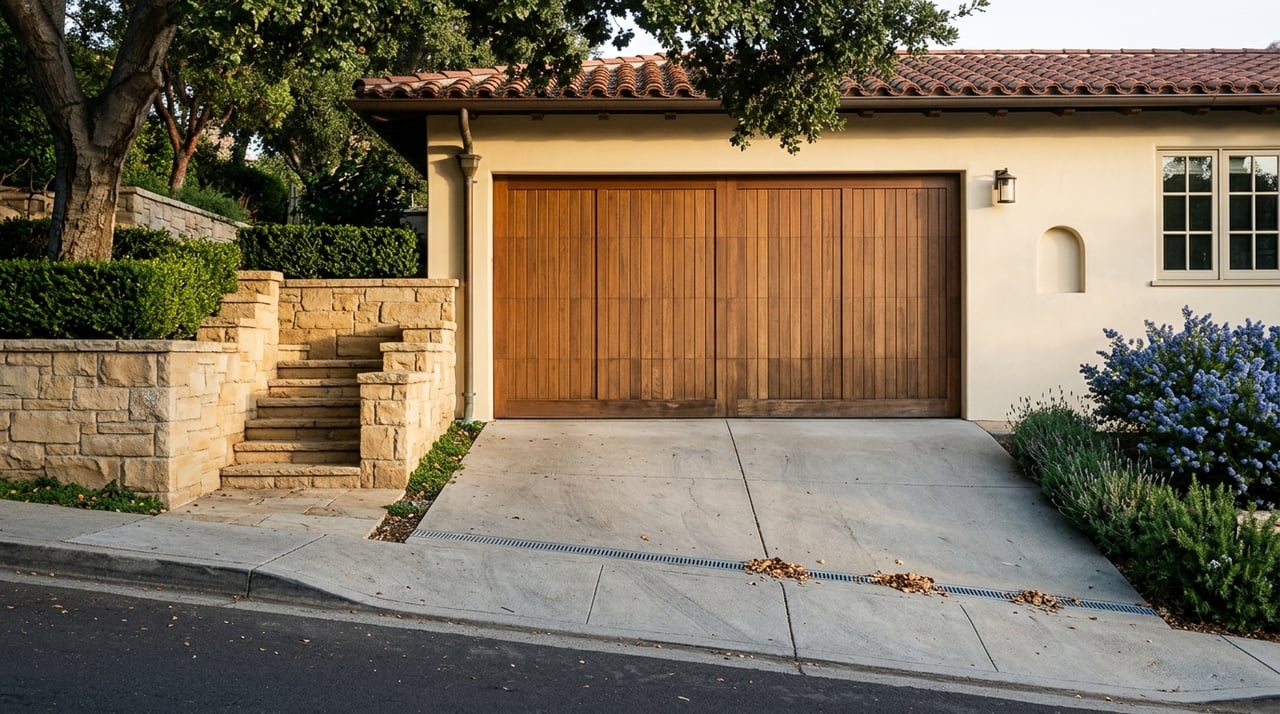
If you are looking at Kensington, you are not shopping in a typical East Bay market. This is a tiny hillside community where views, older homes, lot constraints, and local planning rules can shape value just as much as square footage. Whether you are buying your next home or thinking about selling, understanding those moving parts can help you make better decisions. Let’s dive in.
Why Kensington feels different
Kensington is a very small, unincorporated community in Contra Costa County with about 5,179 residents and just 2,207 housing units, according to local demographic data. It is bordered by Berkeley and El Cerrito, but it is not a city with its own municipal government.
That matters because Kensington operates with its own special districts and a distinct planning framework. For you as a buyer or seller, that can translate into a market that feels more regulated, more preservation-oriented, and more sensitive to lot conditions than many nearby neighborhoods.
Prices stay high in a small market
Kensington is both small and expensive, and those two facts go together. Census and ACS-based data show a median owner-occupied home value of about $1.539 million, while Zillow reported a typical home value of $1.510 million as of March 31, 2026.
Inventory is also extremely limited. Zillow reported just 10 homes for sale, and that kind of thin supply means a few sales can shift headline numbers quickly. In a market this small, you should treat monthly or even quarterly price swings with caution.
A recent Redfin snapshot cited in the same market data source showed a median sale price of $1.8 million, a median sale price per square foot of $805, and homes selling in 17 days. The takeaway is not just that homes are costly. It is that well-positioned homes can move fast when pricing, presentation, and buyer demand align.
Detached homes define the market
If you picture Kensington as a single-family hillside market, that picture is mostly correct. Demographic housing data show that 96.4% of housing units are detached single-family homes.
That creates a very specific buyer pool. Most people searching here are not comparing high-rise condos, large townhouse communities, and tract developments. They are comparing detached homes with different levels of updating, view orientation, access, and lot usability.
The housing stock is also older than average. The median construction year is 1945, with 38.6% of homes built before 1940 and another 21.1% built in the 1940s, based on the same local housing profile. That means original charm, deferred maintenance, retrofits, and renovation potential often play a central role in both pricing and negotiations.
Older homes create opportunity and complexity
Older homes can be a major draw in Kensington, but they also require careful evaluation. Buyers may find attractive architecture, established landscaping, and mature hillside settings that are hard to replicate in newer communities.
At the same time, older housing can come with a longer list of questions. You may need to look more closely at systems, prior improvements, lot drainage, retaining conditions, access, and how past upgrades fit current county standards.
For sellers, this is where preparation matters. A polished launch can highlight period character, views, and meaningful updates, while helping buyers understand the practical realities of the property with fewer surprises.
Views matter in Kensington
Views are not just a lifestyle feature here. They are part of Kensington’s planning identity and part of how the market often responds to certain homes.
Contra Costa County says Kensington’s planning framework protects views, and the community also has a Tree Obstruction of Views ordinance that applies only in unincorporated Kensington. That alone tells you how central view preservation is to the area.
Market behavior also points in the same direction. Redfin’s fall 2025 home-trend analysis, cited in the county-backed research, found that listings tagged with the View feature showed a 111.5% sale-to-list ratio in Kensington, with a median list price of $1.398 million. That does not establish a fixed premium, but it does suggest that view-oriented homes can outperform the broader market.
For buyers, the key is to look beyond the photo set. Ask how the view is framed from the main living areas, whether trees or future growth could affect it, and how much of the lot’s value is tied to that outlook.
Hillside lots change the buying equation
In Kensington, the lot can be just as important as the house. The county notes that the community’s standards were tailored to small average lot sizes, high density, and hillside conditions, and that there is limited room for large-scale growth.
That is one reason so much activity centers on improving existing homes rather than building new subdivisions. If you are comparing homes here, you may want to weigh:
- Slope and usability of outdoor space
- Street access and driveway practicality
- Parking setup
- Retaining features and terracing
- Privacy, light, and view relationships with neighboring homes
These factors can shape both daily life and future project options. They can also affect buyer demand when it is time to resell.
Permits and design review are part of the story
Kensington’s regulatory environment is more layered than many buyers expect. Contra Costa County says the area has its own planning overlay that protects size, privacy, light, and views, and that Kensington Design Review and undersized-lot review are often part of the permit path.
The county also explains in its Kensington ADU guidance that the Kensington Municipal Advisory Council advises on building permit applications under this overlay. In plain terms, renovations and additions may involve more review than you would see in a more conventional suburban setting.
That does not mean projects are impossible. It means you should go in with realistic expectations. For buyers considering expansion, an ADU, or major exterior changes, early diligence is especially important.
Commute and access are highly specific
Kensington’s hillside setting is a big part of its appeal, but it also shapes how you move through daily life. County planning materials describe the community as sitting along Arlington Avenue, a winding route connecting Berkeley to the south and El Cerrito to the north.
The county also points to access to transit and regional parks, while BART’s planning materials note that El Cerrito Plaza Station serves Kensington and nearby hillside areas. Local demographic data put the mean travel time to work at 32.7 minutes.
For some buyers, that mix is a sweet spot. You can have a hillside setting with transit access nearby, but your actual experience will depend heavily on where the home sits, how quickly you can reach Arlington, and whether parking and street width work for your routine.
Parking and street conditions deserve attention
In flatter neighborhoods, parking may be a quick checkbox. In Kensington, it can be a much bigger factor.
County hazard materials describe narrow streets and steep terrain, and local roadwork notices often involve parking restrictions, street sweeping coordination, and alternative routes during maintenance work. The practical lesson is simple: when you evaluate a property, pay close attention to approach, turning radius, guest parking, garage function, and how the home feels during everyday arrivals and departures.
This is true for sellers as well. If your property has notably usable parking or easier access than competing listings, that can be a meaningful strength in buyer perception.
Wildfire and insurance shape decisions
One of the most important parts of Kensington’s hillside market is risk planning. County hazard documents say the community borders major wildland areas, includes steep terrain and narrow roads, and faces wildfire evacuation challenges.
The same county hazard materials indicate that all of Kensington is identified within a Very High Fire Hazard Severity Zone in one annex, while broader county planning describes parts of the community across Very High, High, and Moderate zones. For buyers, that means hazard context is not abstract. It can affect cost, insurability, and comfort level.
Insurance should be part of your early diligence, not a last-minute task. The California Department of Insurance says the FAIR Plan serves as the insurer of last resort and notes that traditional insurers have pulled back from higher-risk areas, even as the state works on reforms to stabilize the market.
If you are buying in Kensington, it is wise to gather insurance quotes early, especially for homes on steeper or brush-adjacent lots. If you are selling, understanding your property’s current insurance context can help set expectations for buyers before they get deep into escrow.
What buyers should focus on
If you are buying in Kensington, your search should balance emotion and analysis. A beautiful house with a dramatic outlook may still need careful review around access, parking, lot constraints, permit history, and insurance.
As you compare options, focus on these questions:
- How much of the value is tied to the view?
- How functional is the lot for daily use?
- What updates have already been completed?
- How feasible are future improvements under local review rules?
- What does insurance look like for this specific site?
In a market this small, there may not be many perfect substitutes. That makes disciplined due diligence even more important.
What sellers should know
If you are selling in Kensington, buyers are often paying close attention to details beyond the basics. They want to understand not only the home’s finishes and floor plan, but also the lot, access, parking, view orientation, and any permitting or improvement history.
That creates an opportunity for strong preparation. A thoughtful pricing strategy, premium presentation, and clear property story can help buyers see the full value of what makes your home distinctive.
It also helps to anticipate the practical questions. When you answer concerns about hillside living early and clearly, you can create more confidence and smoother negotiations.
Why local strategy matters here
Kensington is the kind of market where broad regional averages only tell part of the story. Because inventory is so limited and homes vary widely by lot, view, condition, and access, neighborhood-level judgment matters.
That is true whether you are making an offer or preparing a listing. In a small hillside community, the right strategy usually comes from reading the micro-details correctly, not just from looking at headline numbers.
If you are thinking about buying or selling in Kensington, working with someone who can interpret the data, the property specifics, and the local context together can make the process far more confident and informed. When you are ready, connect with Analise Smith-Hinkley for strategic, neighborhood-focused guidance.
FAQs
What makes Kensington’s housing market different from nearby East Bay areas?
- Kensington is a very small, mostly detached single-family market with older housing stock, limited inventory, hillside lots, view-oriented value, and a distinct county planning overlay.
How expensive are homes in Kensington, California?
- Recent data in the research report show a typical home value around $1.510 million, a median owner-occupied home value around $1.539 million, and a Redfin median sale price snapshot of $1.8 million, though small sample size can move medians quickly.
Why do views matter so much in Kensington real estate?
- Views are central to both buyer appeal and local regulation, with county rules that protect views and market evidence showing strong performance for listings identified with view features.
Are most homes in Kensington detached houses?
- Yes. Research cited in the report shows that 96.4% of housing units in Kensington are detached single-family homes.
What should buyers know about permits in Kensington?
- Buyers should know that Kensington has a planning overlay focused on size, privacy, light, and views, and that design review and other permit review steps may apply to additions, ADUs, and exterior changes.
How does wildfire risk affect Kensington homebuyers?
- Wildfire risk can affect insurance availability, underwriting, and overall comfort with a property, so buyers should gather insurance quotes early and evaluate lot-specific conditions like slope, vegetation, and access.
Does Kensington offer access to BART and commuting routes?
- Yes. Kensington is connected by Arlington Avenue and is served by nearby El Cerrito Plaza Station, though your day-to-day commute experience will vary based on the home’s exact hillside location and parking access.